

Why Structure Matters
Flexibility and creativity are valued in business, but without clear structure, hidden costs accumulate quickly. Structure isn’t bureaucracy, it ensures clarity, accountability, and efficiency. Without it, teams waste time, outputs vary, and opportunities are missed. Clear processes allow resources to flow efficiently, risks to be managed, and teams to focus on high-value activities.
Hidden Costs of Unstructured Work
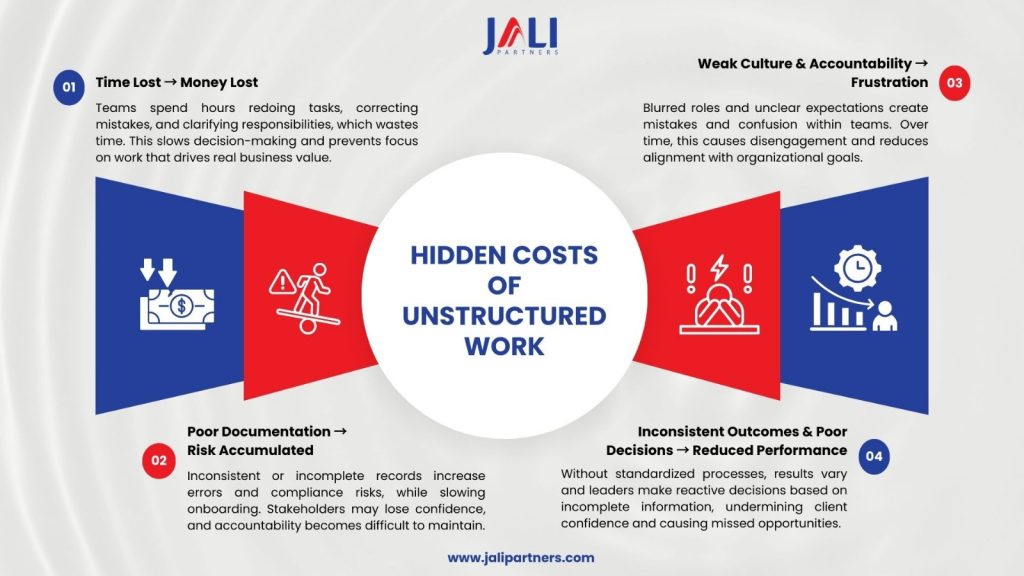
Each of these hidden costs directly impacts efficiency, team performance, and organizational growth. Recognizing and addressing each of these issues is the first step toward building stronger, more reliable processes.
Building or Rebuilding Structure
Creating structure begins with understanding how work currently flows and identifying gaps or inefficiencies. By documenting key processes, organizations gain a clear picture of where tasks overlap, where delays occur, and which workflows need standardization. Consistent tools and templates for reporting, approvals, and communication ensure everyone is aligned and reduces the risk of errors.
Equally important is setting clear expectations. Measurable goals and performance indicators give teams clarity on what success looks like, making accountability tangible rather than abstract. Training and onboarding programs should then reinforce these processes, ensuring new and existing team members follow established workflows rather than relying on guesswork.
Finally, structure must evolve. Periodic reviews help identify bottlenecks, outdated procedures, or areas for improvement. By continuously refining processes, organizations maintain efficiency, adapt to growth, and ensure that structure supports both flexibility and performance.
The Role of Leadership
Leaders set the tone for structure. By guiding teams, monitoring adherence, and supporting accountability, they transform processes into a living system that drives efficiency, reduces mistakes, and strengthens overall performance. Leadership ensures that structure becomes part of the organization’s daily operation rather than a set of static rules.
What to Remember
Structure is a catalyst for efficiency, reliability, and growth. It turns wasted time into productive effort, risk into control, and confusion into clarity. Businesses that invest in clear workflows and accountability don’t just survive, they perform better, scale smarter, and maintain trust with clients and teams.