

Have you ever wondered why some initiatives fail even when everyone seems committed? Or why certain projects drag on despite capable teams? The answer often isn’t talent, effort, or resources, it’s alignment.
Decisions may seem routine, but when they diverge from organizational goals, culture, or strategy, they create hidden costs that quietly erode performance, trust, and growth. These costs rarely make headlines, yet they shape the long-term health of any organization. Understanding these hidden costs and learning to prevent them is what separates leaders who react from leaders who shape the future.
Why Some Decisions Backfire
Imagine a ship where each sailor rows in a different direction. Even if every sailor works hard, the ship drifts off course. Misaligned decisions operate the same way. Individually, they may seem harmless, but together they generate inefficiency, confusion, and missed opportunities.
Ask yourself:
- How often do we correct a decision only to find the next one contradicting it?
- How frequently do teams hesitate because they are unsure whether their actions fit the bigger picture?
Recognizing these patterns is the first step toward understanding the hidden cost of misalignment.
Signs of Misaligned Decisions
Misalignment often shows up in patterns and behaviors before the full impact is felt. Recognizing these signs early can prevent bigger issues:
- Confusion vs. Clarity: Teams are unsure about priorities, which slows progress and increases uncertainty.
- Speed vs. Effectiveness: Quick decisions create bottlenecks downstream, requiring rework or corrections.
- Ownership vs. Accountability: Even with defined roles, responsibilities blur, and hesitation grows because teams fear contradicting overall goals.
These signs indicate that decisions are not fully aligned with organizational strategy or culture, they are early warnings to intervene before costs accumulate.
Hidden Costs of Misaligned Decisions
Once misaligned decisions persist, their impact becomes tangible. These are the real costs that organizations may not immediately see:
- Eroded Trust: Conflicting directions reduce confidence in leadership.
- Reduced Morale: Repeated corrections and unclear priorities frustrate employees.
- Missed Opportunities: Important initiatives are delayed or ignored due to inconsistent decision-making.
- Financial Drag: Inefficiencies, errors, and rework quietly consume resources over time.
How to Avoid Misaligned Decisions
Aligned decision-making starts with intentional steps that everyone can apply:
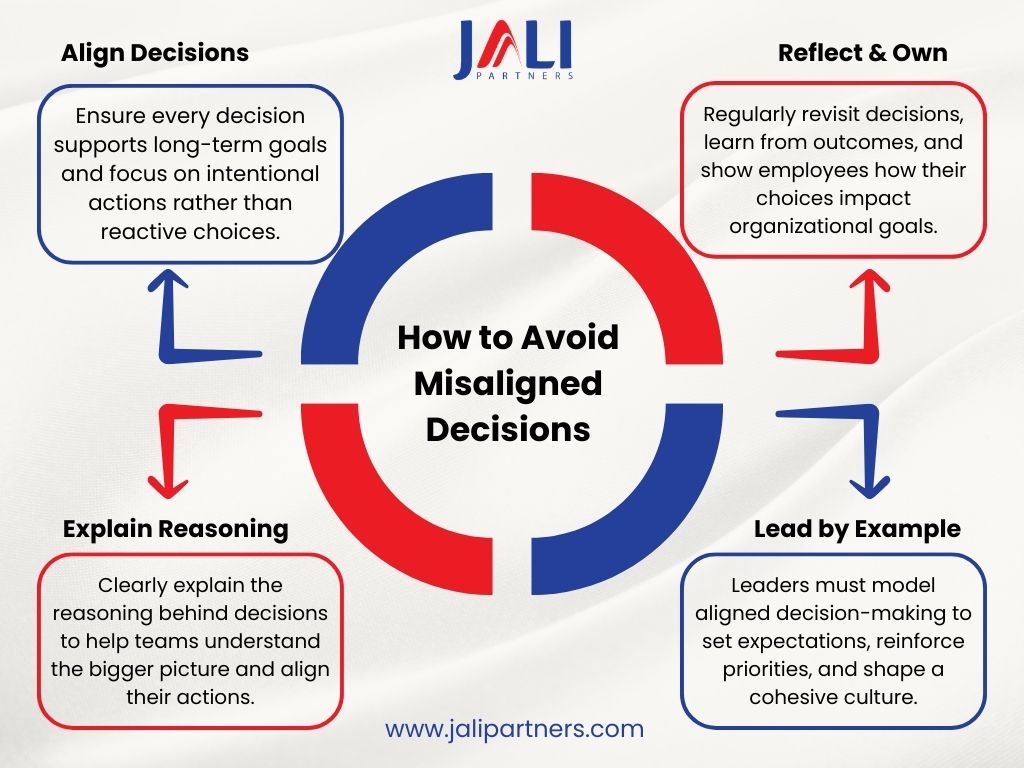
Alignment Is a Strategic Advantage
The cost of misaligned decisions is often invisible, but the consequences are real: eroded trust, frustrated teams, lost opportunities, and wasted resources. Organizations that build alignment into decision-making through clarity, communication, review, and accountability, turn uncertainty into clarity and ambition into measurable outcomes.
Alignment is not just a process, it is a strategic advantage. Leaders who cultivate it empower employees, strengthen culture, and ensure sustainable growth. The real question isn’t whether you make decisions, it’s whether your decisions move everyone in the same direction.