

When organizations talk about growth, the conversation often centers on innovation, expansion, or new opportunities. Yet behind many long-lasting and resilient organizations lies a quieter force that rarely receives the same attention: financial discipline.
You might ask yourself: Why do some organizations with similar resources and strategies achieve steady growth while others stall? The answer is often hidden in how financial decisions are made and sustained over time.
Financial discipline is not about restricting ambition or avoiding investment. Instead, it ensures resources are managed thoughtfully, so growth is sustainable, consistent, and resilient. Without it, even the most promising strategies can struggle to deliver results.
Why Financial Discipline Matters
Growth requires resources. Whether an organization is investing in people, technology, or operations, financial decisions shape how effectively those resources create value.
When financial discipline is weak, short-term urgencies can overshadow long-term priorities, resources may be allocated inefficiently, financial pressure can build unexpectedly, and strategic opportunities are often missed. By contrast, disciplined financial management allows organizations to balance ambition with stability, ensuring that progress today does not compromise resilience tomorrow.
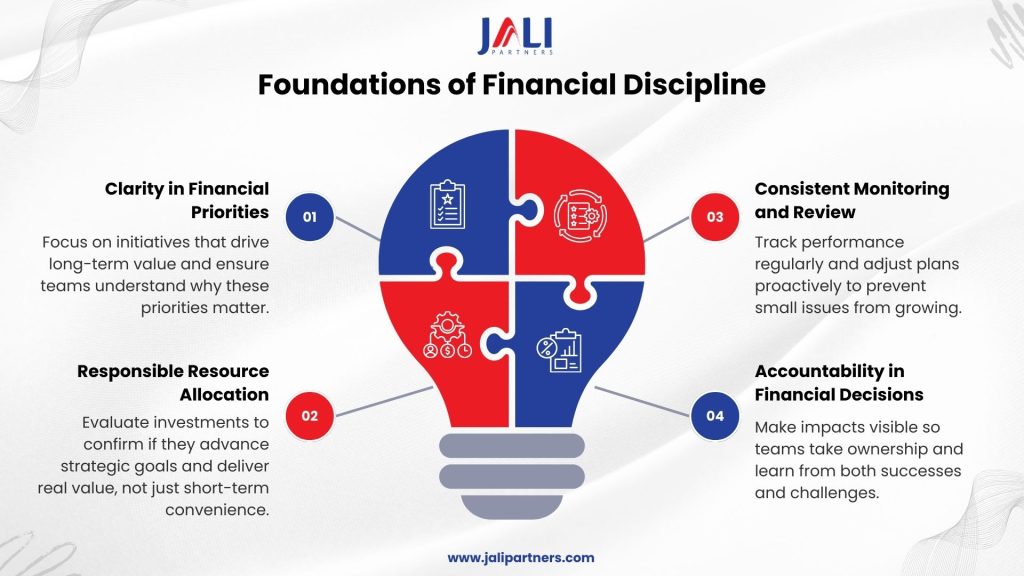
Foundations of Financial Discipline
Financial Discipline Beyond Cost Control
Financial discipline is not simply about cutting costs; it is about making informed, strategic choices. Disciplined organizations invest thoughtfully, manage risks carefully, and maintain flexibility to respond to change.
Practiced consistently, financial discipline helps organizations navigate uncertainty, support innovation, and maintain steady progress, turning it into a strategic advantage rather than a constraint.
Building Financial Discipline Across the Organization
Developing discipline is a mindset cultivated through reflection, communication, and shared responsibility. Align financial decisions with long-term goals, foster transparency, promote accountability, and review performance regularly. Over time, this transforms financial discipline from a process into a shared organizational habit.
Strategic Reflection
Sustainable growth rarely depends on dramatic decisions alone. It emerges from consistent, disciplined choices made thoughtfully over time.
Financial discipline quietly supports stability, strengthens resilience, and enables organizations to pursue opportunities with confidence. Organizations that treat it as a core leadership responsibility position themselves not just to grow, but to grow sustainably and responsibly.