

Imagine two organizations with similar talent, resources, and strategies. Both launch initiatives, both communicate ambitious goals. Yet over time, one thrives steadily, while the other struggles to maintain momentum. What separates them is rarely strategy alone, it’s consistency, the repeated, dependable actions that build trust, reinforce priorities, and turn plans into results.
Leadership is rarely judged by a single decision or speech. It is assessed through patterns of behavior: how decisions are made, standards are upheld, and commitments are followed through. As Peter Drucker observed, “Leadership is not defined by intelligence, but by consistency of character and action.”
Why Consistency Matters
Consistency provides the backbone for organizational trust and predictability. When leaders act in a reliable and repeatable way, teams know what is expected and can align their work with strategic priorities. Decisions made consistently reduce confusion and ensure that actions contribute to long-term goals rather than short-term reactions.
Without consistency, even well-crafted strategies can falter. Teams may become uncertain about priorities, initiatives may start but not reach completion, and employees may question whether standards are truly applied. In contrast, consistent leadership creates an environment where expectations are clear, accountability is evident, and performance becomes steady and reliable.
Developing Consistency as a Leadership Practice
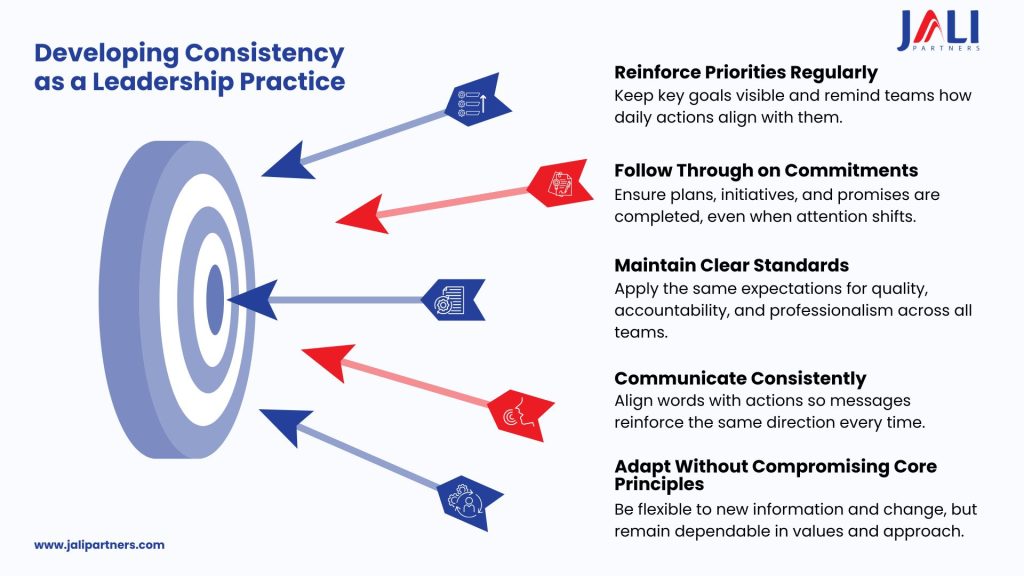
How Consistency Builds Trust
Trust is rarely earned in a single moment. It develops through repeated experiences over time, as teams observe whether leaders maintain standards, follow through on commitments, and reinforce priorities consistently. Predictable leadership behavior creates credibility and confidence, ensuring that employees feel secure in their roles and aligned with the organization’s direction.
When leaders are inconsistent, confusion takes over. Teams question whether initiatives will last or if standards will be applied equally, and motivation can erode. By contrast, consistent leadership quietly but powerfully answers these questions, enabling teams to operate with clarity and confidence.
Consistency Is Not Rigidity
It is important to distinguish consistency from rigidity. Leaders who are consistent maintain core values and standards while remaining open to new information, changing circumstances, and innovative ideas. In practice, this means adapting strategies when necessary, learning from new insights, and adjusting approaches while preserving the principles that define dependable leadership.
Consistency is therefore not resistance to change, it is the dependable application of leadership principles, even in uncertain or evolving contexts. This balance ensures teams can adapt without losing stability or direction.
Closing Perspective
Lasting leadership impact does not come solely from dramatic decisions or bold moves; it emerges from consistent actions repeated over time. When leaders maintain clear priorities, communicate reliably, and hold standards firmly, they strengthen trust, enable predictable performance, and turn strategy into sustainable results.
In a world where change is constant, consistency remains one of the most valuable and underestimated leadership skills. Leadership is not only about what we decide once, but about what we reinforce every day.