

The Most Expensive Word in Business Might Be Assume.
“We assumed everyone understood.”
It sounds like a harmless statement. Yet behind it are many of the challenges organizations face every day: missed deadlines, duplicated work, poor decisions, frustrated customers, and failed projects.
Assumptions appear whenever expectations remain unspoken, responsibilities are unclear, or communication ends before understanding begins. Sharing information is not the same as creating clarity. The strongest organizations know that successful execution starts long before the work itself. It starts with a shared understanding of what needs to be done, who is responsible, and what success looks like.
Small Assumptions. Big Consequences.
Business problems rarely begin with one major mistake. More often, they begin with small assumptions that go unchallenged. A manager assumes priorities are clear. A client believes a service includes something that was never agreed upon. One team assumes another has completed a task.
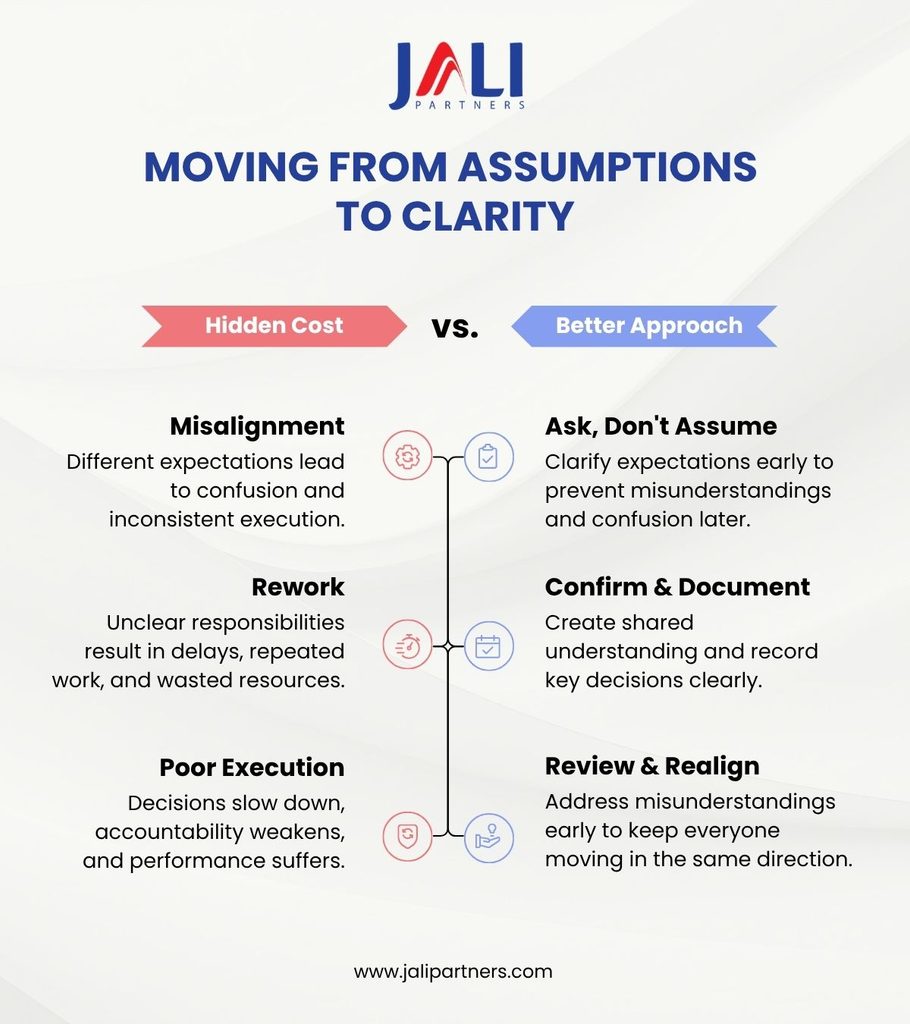
Individually, these moments seem insignificant. Together, they create misalignment, unnecessary rework, and inconsistent execution. The issue is rarely a lack of effort, it’s that people are working from different expectations.
Moving from Assumptions to Clarity
Clarity Drives Better Execution
Organizations invest in strategy, technology, and talent, but those investments produce results only when people move in the same direction. Clarity improves collaboration, strengthens accountability, reduces unnecessary work, and enables faster, better decisions. It allows teams to focus less on interpreting expectations and more on delivering meaningful results.
High-performing organizations don’t leave understanding to chance. They encourage questions, define responsibilities, document important decisions, and regularly realign teams as priorities evolve. Because effective communication isn’t measured by what was said. It’s measured by what was understood.
Key Takeaways
Every assumption creates a gap where clarity should exist.
The larger an organization grows, the more expensive those gaps become. Whether leading a business, managing a project, or working within a team, sustainable success depends on replacing assumptions with shared understanding. Because assumptions create uncertainty, clarity creates execution.
Reflection Question
What assumption within your team or organization could be replaced with a simple conversation that creates greater clarity?