
In a world where markets evolve rapidly and customer expectations shift daily, standing still is not an option. The most successful organizations aren’t just those that innovate once; they are the ones that continuously improve.
Continuous improvement, rooted in the Kaizen philosophy, is about making small, consistent changes that collectively lead to remarkable results. It’s not about waiting for a breakthrough moment, but about nurturing a mindset where everyone; from leadership to frontline staff, looks for ways to make things better every day.
As author and management expert Ken Blanchard once said,
“Feedback is the breakfast of champions.” Encouraging a culture of openness and reflection is the first step toward lasting excellence.
Why Continuous Improvement Matters
Operational excellence isn’t achieved overnight; it’s cultivated through intention, discipline, and collaboration. Businesses that prioritize small, ongoing improvements see lasting benefits: fewer errors, smoother workflows, greater efficiency, and a more engaged workforce.
Over time, this mindset transforms how an organization operates and responds to change. It shifts focus from firefighting problems to preventing them, from surviving to thriving.
As W. Edwards Deming, the father of modern quality management, once noted:
“It is not necessary to change. Survival is not mandatory.”
The message is clear continuous improvement isn’t optional; it’s essential for organizations that want to remain relevant and resilient.
How to Build a Culture of Continuous Improvement
Here are practical steps organizations can take to make improvement part of their DNA:
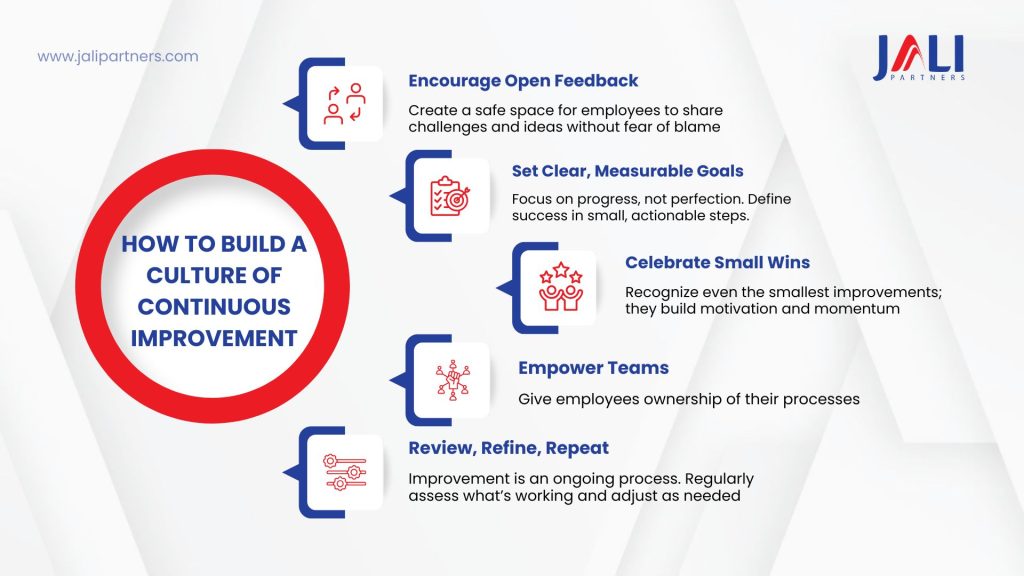
- Encourage Open Feedback: Create a safe space for employees to share challenges and ideas without fear of blame. Innovation starts with listening.
- Set Clear, Measurable Goals: Focus on progress, not perfection. Define success in small, actionable steps.
- Celebrate Small Wins: Recognize even the smallest improvements; they build motivation and momentum.
- Empower Teams: Give employees ownership of their processes. When people feel trusted, they naturally seek better ways to perform.
- Review, Refine, Repeat: Improvement is an ongoing process. Regularly assess what’s working and adjust as needed.
When every team member sees themselves as a problem-solver, improvement becomes not just a process but a shared purpose.
The Role of Leadership
True operational excellence starts at the top. Leaders must model the mindset they wish to see; embracing transparency, encouraging collaboration, and rewarding curiosity. When improvement becomes a shared mission rather than a mandate, transformation happens naturally.
Great leaders don’t simply direct change; they inspire it. They empower their teams to experiment, learn, and grow continuously.
As John C. Maxwell reminds us:
“The pessimist complains about the wind. The optimist expects it to change. The leader adjusts the sails.”
A culture of continuous improvement thrives under leadership that values learning over perfection and progress over complacency.
The Bigger Picture: From Efficiency to Excellence
Continuous improvement doesn’t just enhance processes, it enhances people. It builds a culture where curiosity, accountability, and excellence become the norm. The long-term reward is not only higher productivity but also stronger trust, collaboration, and adaptability.
Companies that adopt this mindset are better positioned to face disruption, embrace innovation, and sustain growth in a competitive marketplace; as Vincent Van Gogh said “Great things are done by a series of small things brought together.”